Harvey AI: Custom AI Solution for Large Law Firms Explained
Learn how Harvey AI provides custom AI models for Am Law 100 firms, its partnership with Allen & Overy, OpenAI investment, and enterprise deployment.
What is Harvey AI
Harvey AI is an enterprise legal AI platform designed for large law firms. The company builds custom AI models trained on individual firms’ proprietary documents and legal work. This differs from general legal AI tools that use publicly available legal data. Harvey AI integrates with a firm’s existing document management systems and workflow tools. The platform can assist with contract analysis, legal research, document drafting, and due diligence tasks. Founded in 2022, it quickly gained traction among Am Law 100 firms. The service requires significant setup because each firm gets a custom-trained model. Harvey AI runs on infrastructure based on OpenAI technology but adds layers of customization and security for legal work. The platform doesn’t replace lawyers but acts as a specialized assistant that understands firm-specific language and practices.
Why Harvey AI Exists and Its Purpose
Large law firms face unique challenges that general AI tools can’t solve effectively. These firms have decades of proprietary legal work, client-specific strategies, and specialized practice areas. A generic AI trained on public legal data won’t understand the subtleties of how a particular firm approaches merger agreements or litigation strategy. Harvey AI exists to bridge this gap by creating firm-specific AI models. Its purpose is to help lawyers work faster on routine tasks while maintaining the firm’s unique approach to legal work.
Partners at major firms bill hundreds of dollars per hour. Junior associates spend considerable time on document review and research that could be sped up. The economic model makes sense because large firms can afford custom AI development, and the time savings justify the investment. Harvey AI also addresses confidentiality concerns that prevent firms from using public AI services. Law firms can’t risk sending client data to general chatbots where it might be used for training or exposed to competitors.
The Allen & Overy Partnership
Data Sources Integration:

Allen & Overy, a global law firm, became Harvey AI’s first major client partner in 2022. With over 3,500 lawyers across 40 offices worldwide, Allen & Overy’s partnership was crucial for Harvey AI as it provided real-world testing at enterprise scale. The firm deployed Harvey AI to lawyers across multiple practice groups and offices.
Allen & Overy used Harvey AI for contract analysis, regulatory research, and legal drafting tasks. According to public statements from Allen & Overy, the platform helped reduce time on certain document review tasks. The partnership also helped Harvey AI refine its enterprise deployment model. Allen & Overy provided feedback on integration with existing legal tech stacks and workflow requirements. This wasn’t just a trial; it was a full production deployment that shaped how Harvey AI approaches other large-firm clients. The case shows that Am Law 100 firms are willing to invest in custom AI if it meets their specific needs and confidentiality requirements.
OpenAI Investment and Technology Foundation
OpenAI made a strategic investment in Harvey AI in 2022. This was notable as OpenAI rarely invests in application-layer companies. The investment signals that OpenAI sees legal AI as a significant enterprise market. Harvey AI uses OpenAI models as its foundation but adds substantial customization layers.
The platform takes base models like GPT-4 and fine-tunes them on firm-specific legal documents. This creates models that understand a particular firm’s language, precedents, and client matters. The OpenAI investment also gives Harvey AI early access to new model capabilities and dedicated support. However, Harvey AI is not just a wrapper around ChatGPT. The company builds custom training pipelines, security infrastructure, and legal-specific features. The relationship with OpenAI gives Harvey AI a competitive edge in accessing advanced language models while maintaining the customization that law firms require.
How Harvey AI Works and Workflow Integration
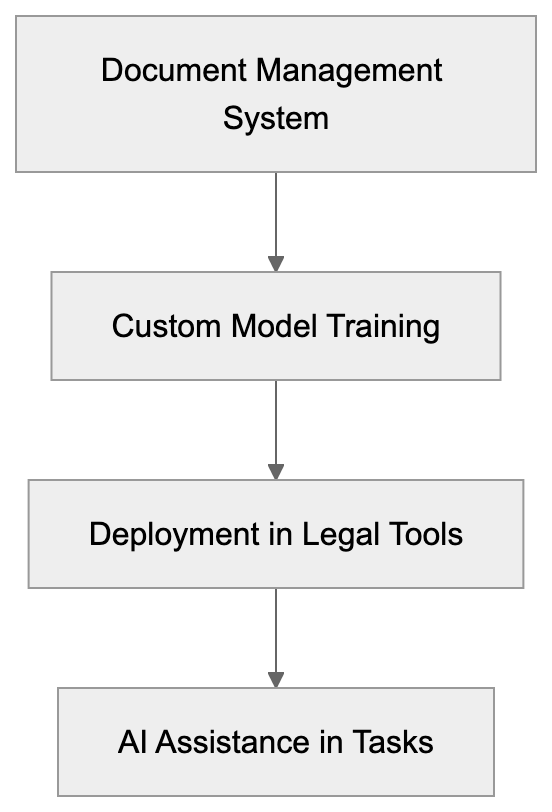
Harvey AI integrates into a law firm’s existing technology infrastructure. The deployment begins with connecting to the firm’s document management system where years of legal work are stored. Harvey AI then trains a custom model on this proprietary data under strict confidentiality agreements.
The training process takes weeks or months depending on the volume of documents and the firm’s requirements. Once deployed, lawyers access Harvey AI through web interfaces or integrations with tools like Microsoft Word and document review platforms. A lawyer might ask Harvey AI to analyze a contract for specific clauses, research a legal question using firm precedents, or draft language based on previous work. The system provides answers with references to specific documents in the firm’s repository, making it auditable.
Lawyers can verify the AI’s reasoning by checking source documents. Harvey AI doesn’t make final legal decisions but speeds up research and drafting tasks. The workflow keeps lawyers in control while reducing time spent on routine analysis.
Confidentiality and Security Measures
Confidentiality is critical for law firms handling sensitive client matters. Harvey AI implements enterprise-grade security to address these concerns. The platform uses dedicated cloud infrastructure for each client firm, ensuring one firm’s data never mixes with another firm’s data.
Harvey AI signs strict confidentiality agreements and complies with legal industry data protection standards. The custom models trained on firm data stay within the firm’s controlled environment. Harvey AI does not use client data to improve models for other customers. This approach differs from consumer AI services that use inputs for general training.
The platform also includes access controls so firms can limit which lawyers see which AI capabilities. Audit logs track how the AI is used and what documents it accesses. These security measures are essential because law firms face professional responsibility obligations to protect client information. Harvey AI markets itself as a solution that provides AI capabilities without compromising confidentiality.
Comparison with General Legal AI Tools
Several legal AI tools exist in the market with different approaches. Tools like LexisNexis and Westlaw have added AI features to their legal research platforms. They use publicly available case law and statutes as training data. While these work well for general legal research, they don’t understand firm-specific practice.
Tools like Casetext CoCounsel use similar foundation models but focus on individual lawyer productivity instead of enterprise customization. Harvey AI stands out by offering firm-specific model training and enterprise deployment. This comes at a higher cost and longer setup time.
Smaller firms or solo practitioners likely choose general legal AI tools that are ready to use immediately. Harvey AI targets Am Law 100 and large international firms with the resources for custom implementation. The trade-off is between immediate availability with general tools versus customized capability with Harvey AI. Some firms use both types of tools: general tools for research and Harvey AI for firm-specific document work. The legal tech and AI for lawyers market is evolving quickly. Different tools serve different segments of the legal profession.
Enterprise Deployment Model and Costs
Harvey AI uses an enterprise sales and deployment model rather than self-service signup. The company works directly with law firm leadership and IT departments. Implementation requires integration with existing systems, custom model training, and lawyer onboarding. This process can take several months from contract signing to full deployment.
Pricing is not publicly disclosed. However, industry estimates suggest six or seven-figure annual contracts for large firms. The cost depends on firm size, number of users, and training data volume. Law firms justify this investment by calculating time savings on billable work. If Harvey AI saves partners and associates significant hours on document review and research, the ROI can be positive.
The enterprise model also includes ongoing support, model updates, and feature development. Harvey AI assigns dedicated teams to major clients to ensure successful adoption. This high-touch approach works for large firms but limits how quickly Harvey AI can expand to smaller legal markets.
Conclusion
Harvey AI represents a specialized approach to AI for the legal profession. The platform focuses on large law firms that need custom AI models trained on proprietary documents and work product. The partnership with Allen & Overy demonstrated enterprise viability. The OpenAI investment provided technology advantages.
Customization Process:
Harvey AI addresses confidentiality concerns that prevent firms from using general AI services by keeping data isolated and secure. The deployment model requires significant investment in both cost and implementation time. This makes sense for Am Law 100 firms but limits adoption among smaller practices.
Compared to general legal AI tools, Harvey AI offers deeper customization at a higher cost and complexity. The workflow integration helps lawyers work faster on research, contract analysis, and drafting while maintaining control over final work products. As legal AI evolves, Harvey AI occupies the enterprise segment focused on firm-specific customization rather than broad market tools. This approach works for large firms willing to invest in custom AI infrastructure that understands their unique legal practice.
Technology and Security Layer:

Frequently Asked Questions
What makes Harvey AI different from other legal AI tools?
Harvey AI distinguishes itself by creating customized AI models tailored specifically for large law firms using their proprietary documents and legal practices. In contrast, many other legal AI tools rely on publicly available data, which may not address the unique challenges and strategies of individual firms.
How long does it take to implement Harvey AI?
The implementation of Harvey AI can take several months, depending on the size of the law firm and the volume of documents. The process involves integrating with the firm's existing systems and training the custom models to ensure they meet the firm's specific needs.
What security measures does Harvey AI employ to protect client data?
Harvey AI utilizes enterprise-grade security features, including dedicated cloud infrastructure for each client, strict confidentiality agreements, and compliance with legal industry data protection standards. Additionally, access controls and audit logs track the use of the AI and ensure data privacy.
Is training data from client firms ever shared with other clients?
No, training data from client firms is not shared with other clients. Harvey AI ensures that each firm's data remains within its controlled environment and does not use client data to improve models for other customers.
What is the expected return on investment (ROI) for law firms using Harvey AI?
Firms typically assess ROI based on the time saved in document review and legal research. If Harvey AI helps partners and associates save significant hours on billable tasks, the cost of implementation can justify itself through increased productivity and efficiency.
Can smaller law firms benefit from Harvey AI?
While Harvey AI is primarily designed for large law firms, smaller firms might not find the custom implementation model feasible due to associated costs and complexity. Smaller firms often opt for general legal AI tools that are ready to use immediately, but some may choose to adopt Harvey AI as they grow.
What types of tasks can Harvey AI assist with?
Harvey AI can assist with a variety of legal tasks, including contract analysis, legal research, document drafting, and due diligence. It significantly speeds up these processes while allowing lawyers to maintain control over their final work products.
Track Your AI Visibility
See how AI chatbots like ChatGPT, Claude, and Perplexity discover and recommend your brand.